
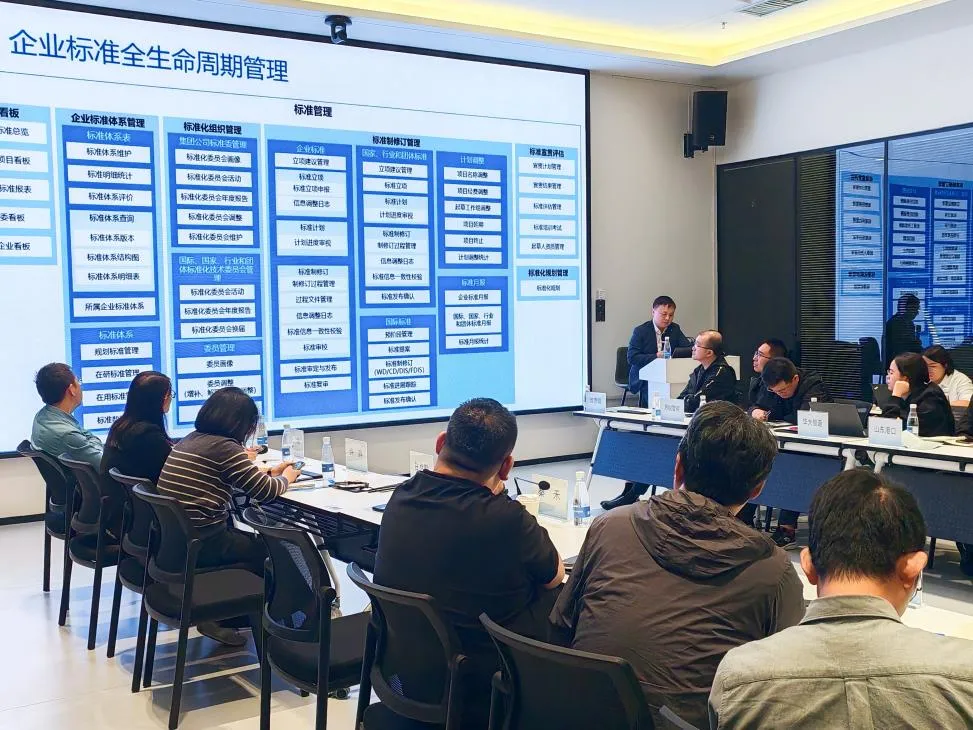
On October 15, China (Shandong) Pilot Free Trade Zone Qingdao Area ("SDPFTZ Qingdao Area" for short) hosted a lecture titled "Intelligent Standards, Quality for the Future" to drive quality development through standard digitization and intelligence. By providing a platform for government-enterprise dialogue, the area enabled local enterprises to stay informed about trends in standard digitization and intelligence, enhance their core competitiveness, and advance regional industrial upgrading and quality development through high standards. The event brought together experts in standardization and representatives from over 30 leading standardization enterprises in the area. Qin He, Deputy Director of the SDPFTZ Qingdao Area Management Committee, attended and addressed the event.
From institutional innovation to standard empowerment: A leap forward over the 6 years
Information shows that since its establishment six years ago, SDPFTZ Qingdao Area has increased its share of the city's total foreign trade from from 16% to 20%. In total, it has introduced 190 new projects from Fortune Global 500 enterprises and created 147,000 new jobs.
As the economy grows, so too does the area's exploration of standardization. As of now, the area has contributed to the development and revision of seven international standards and over 130 national and industry standards. It has pioneered the world's first green development indicator system for PFTZs and facilitated the establishment of China's first international standardization technical committee (ISO/TC 344) in the logistics sector, marking a shift from standard implementation to rule formulation.
Exploring a new path for institutional opening-up with intelligent standards
This lecture focused on standard digitization and intelligence, symbolizing the transition of its standardization efforts from conventional textual norms to futuristic data engines.
Experts from the Sub-Institute of High and New Technology & Information Standardization of China National Institute of Standardization delivered a special speech. Information indicates that standard digitization will significantly enhance the capability of enterprises in the area's forefront industries to conduct standard formulation and research, while also improving the efficiency of implementing institutional innovations. For instance, in the intricate international supply chains, digital standards can facilitate the automatic validation of rule parameters and near-instant compliance assessments, effectively converting institutional strengths into advantages in timeliness and cost for enterprises.
Establishing a standard ecosystem: From single-point breakthroughs to systemic capabilities
During the 2025 Enterprise Development Conference held this February, the area issued "Several Policies for High-quality Development of Intellectual Property and Standardization in China (Shandong) Pilot Free Trade Zone Qingdao Area". It introduced various encouraging policies centered on standardization and intellectual property, aiming to fully stimulate the area's vitality of innovation and entrepreneurship and stimulate industrial development.
According to experts from Qingdao Institute of Standardization, SDPFTZ Qingdao Area is developing a comprehensive ecosystem integrating rule formulation with platform support and industrial application. Drawing from their extensive practical experience, the experts systematically reviewed the critical aspects and application scenarios for establishing enterprise standard digitization systems, offering clear guidance on how enterprises can utilize standards to achieve tangible developmental benefits.
The feedback from enterprises serves as a litmus test to determine whether the policies are effectively implemented. During the event, relevant departments and institutions conducted thorough discussions with key enterprises in the area regarding their standardization needs, clarifying application procedures and service channels. Enterprises had in-depth exchanges with experts and relevant department leaders about their experience in contributing to the formulation and revision of national standards, the application of standard digitization tools, and specific needs and challenges in system establishment. Relevant heads of the area and the institute addressed enterprise concerns on site and expressed their determination to effectively meet enterprises' needs through tailored services.
Six years of exploration demonstrated that higher-level opening-up necessitates the adoption of more advanced rules and standards. SDPFTZ Qingdao Area will endeavor to create a practical example of pioneering standard digitization and contribute to the "Shared Vision for a Better World"—the theme of the World Standards Day in 2025.