One year after it started operations, the Qingdao International Energy Free Trade Port in the Qingdao Area of the China (Shandong) Pilot Free Trade Zone (Qingdao FTZ) is emerging as an important regional hub for commodity trade and resource allocation.
Since its official launch on May 28, 2025, the platform has brought in 334 enterprises and service institutions, generating sales revenue of 353.5 billion yuan ($52 billion).
Designed to support development as a national commodity resource allocation hub, the energy port focuses on six core sectors: oil products, minerals, agricultural products, cotton, chemicals, and rubber. Through targeted investment promotion and policy support, the platform has drawn an increasing number of leading enterprises and trading firms.
Occupying a complex of 21,300 square meters with a 95 percent occupancy rate, the port now hosts 210 large-scale wholesale enterprises, with industry leaders making up more than 35 percent of resident companies. The industrial cluster has evolved into an integrated ecosystem linking trade, warehousing, logistics, and financial services.
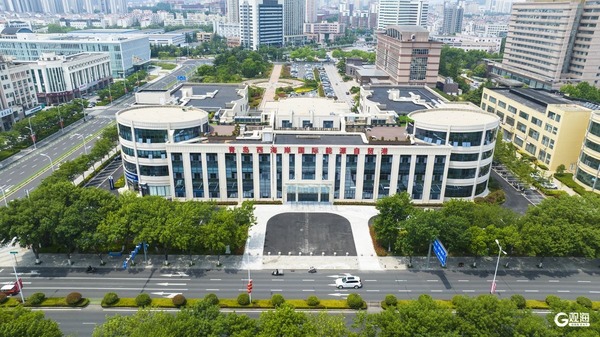
The Qingdao International Energy Free Trade Port hosts 334 companies and institutions, creating a vertically integrated ecosystem where entire supply chains operate side-by-side. [Photo/Guanhai News]
Streamlined administrative services have become a major draw for businesses. Local authorities have reduced the timeline for company registration and operational approvals from 45 days to 15 days.
"Previously, obtaining hazardous chemical operating permits involved lengthy procedures and higher operating costs," said a corporate representative based at the port. "Today, approvals are processed more efficiently, and having upstream and downstream partners concentrated in one location has greatly improved communication and business efficiency."
To support the capital-intensive nature of bulk commodity trading, the free trade port has introduced financing services based on future cargo ownership and electronic warehouse receipt pledges, helping local companies secure more than 50 billion yuan in financing over the past year.
Digital trade infrastructure is also becoming essential for growth. Using AI and big data technologies, the platform builds enterprise capability profiles and helps connect local firms with overseas buyers.
"We are developing an AI-powered 'order discovery center' to help enterprises identify business opportunities and strengthen connections with overseas buyers," said Wang Jianxiang, head of operations for the port.
Looking ahead, the Energy Free Trade Port aims to become a major commodity resource allocation hub in northern China, working toward its long-term goal of achieving 1 trillion yuan in annual trade volume.