On December 2, the second ISO regional workshop of 2025 opened in the China (Shandong) Pilot Free Trade Zone Qingdao Area ("SDPFTZ Qingdao Area" for short). The workshop brought together 22 participants from 10 countries, including Bangladesh, Indonesia, Iran, Laos, Malaysia, Mongolia, Myanmar, Nepal, Thailand, and Vietnam, as well as those from relevant Chinese companies and research institutes. Ji Xiaolong, head of the Working Committee and Management Committee of the SDPFTZ Qingdao Area, Zhang Baolin, representative of the Standardization Administration of China (SAC), and ISO representatives Stephane Mottaz and Tharun Thomas attended the event and delivered speeches.
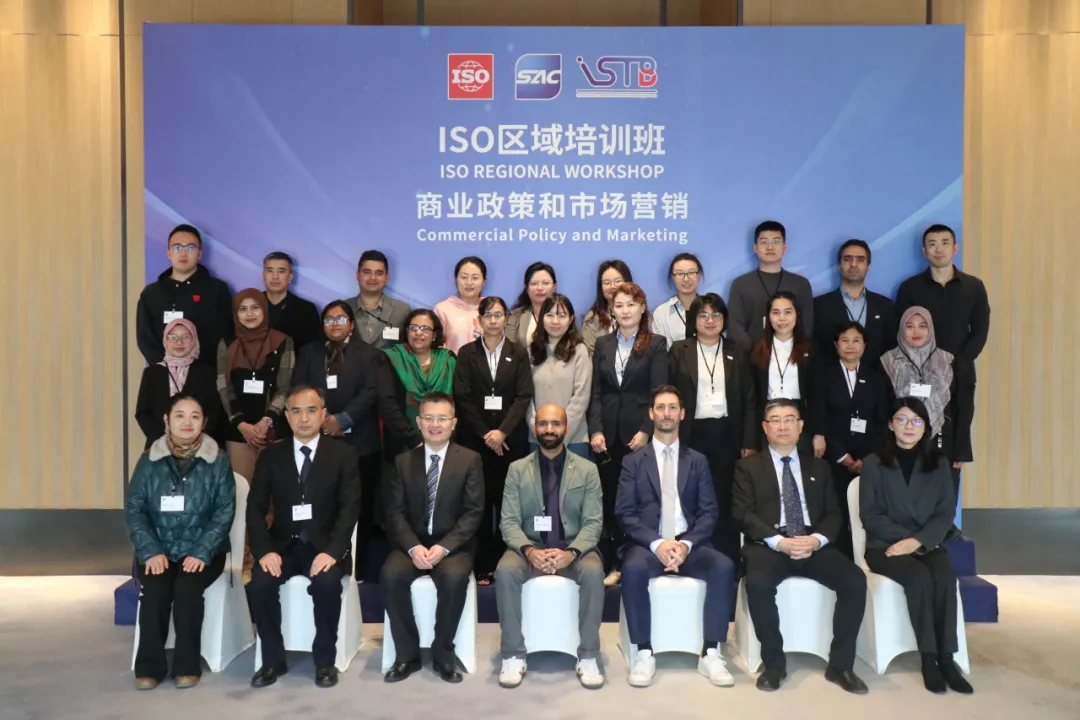
This four-day workshop focused on Commercial Policy and Marketing. Experts from relevant fields explained to participants the standard marketing strategies, customer communication skills, and approaches to integrating standards into national commercial policy. During the workshop, participants visited the International Shipping, Trade and Financial Innovation Base at the SDPFTZ Qingdao Area and the Qingdao Sino-German Ecopark Passive House Technology Center. They gained firsthand experience of the area's innovative practices and notable achievements in green development and the circular economy.
Professionals in standardization are a vital foundation for driving innovation in the development of standards. Since 2024, four ISO workshops focused on circular economy, conformity assessment, and other topics have been successfully held in the SDPFTZ Qingdao Area, which have been highly praised by ISO, relevant experts, and participants. A total of 117 participants from 16 countries, including Bhutan, Bangladesh, Indonesia, and Sri Lanka, joined the workshops. The initiative effectively served as a bridge to foster international exchange, strengthen cooperative ties, and enhance consensus on standards.
In recent years, the SDPFTZ Qingdao Area has continued to deepen its cooperation with the International Organization for Standardization, actively establishing a platform for international dialogue on cultivating, aggregating, and linking standardization resources. The area has accelerated the development of standardization professionals with an international perspective, fostered a more open, inclusive, and efficient pattern of international standardization exchange, and taken the lead in high-quality development through institutional opening-up in the realm of standards. This has provided the country with replicable and scalable practical experience, continuously contributing to reform and opening-up efforts nationwide.